Invasion: Aerial Warfare
- 3.7
- Rating
- 50.00M
- Installs
- Free
- Price
 Analysis by App-foxy
I approached Invasion: Aerial Warfare as a decision rather than a quick download: is this the right kind of strategy game for the way you like to spend short breaks, or will its long-term structure feel like work? After spending time with it, my answer is fairly clear. It is aimed at players who enjoy building military strength gradually, making choices around timing and resources, and returning often to keep an expanding operation moving. It is much less suitable if you want a self-contained strategy experience that can be completed in a few focused sessions.
The game is free to install, belongs to the strategy category, and comes from Tap4fun (Hong Kong) Limited. Its store summary presents it as a tactical war game, but that description only tells part of the story. The real appeal is the ongoing rhythm: develop your position, prepare for the next challenge, decide where limited attention matters most, and accept that progress is tied to patience as much as clever decisions.
What to consider before choosing it
I’d use this section to check whether the game’s recurring decisions fit your routine, not just whether its war theme appeals at first glance. I also think it helps to set a clear limit on play and spending before progress starts to feel personal; with that in mind, the next section looks at what makes its particular format worthwhile beside other strategy games.
You May Also Like

 AccuWeather: Weather Radar
AccuWeather Review: A Quick, Clear Forecast for Everyday Decisions
For everyday plans, the best forecast is the one you can understand quickly. AccuWeather makes rain timing, radar, and local conditions easy to act on, with a few trade-offs.

 Hill Climb Racing
Why Hill Climb Racing Still Turns Crashes Into One More Run
A tiny car, a bumpy hill and one more upgrade: Hill Climb Racing keeps resurfacing because its simple chaos makes every near-miss feel personal.

 AliExpress - Shopping App
AliExpress Makes Global Shopping Feel Personal, but Shoppers Bear the Risk
AliExpress turns a global marketplace into a pocket-sized discovery engine. Its reach is useful, its shopping loop compelling, and its trade-offs easy to miss.

 Lords Mobile: Kingdom Wars
Lords Mobile Is a Kingdom-Building Routine, Not a Quick Match
A case-by-case verdict on the building, battles, device demands, and social commitments that make Lords Mobile rewarding for some players and exhausting for others.

 PDF Scanner app - TapScanner
TapScanner Makes Paperwork Easier to Capture, Check, and Share
TapScanner makes scanning with a phone feel less like a rescue operation and more like a dependable step in getting work done. Its capture tools are useful, though not flawless.

 Block Blast!
 Shows How Much a Puzzle Game Can Leave Out
A quiet grid game shows why puzzle players increasingly value instant clarity, repeatable skill and low-pressure play—and where the genre still needs to catch up.
More From Our News Desk
View All News


The central question is whether you enjoy persistent progress
Before I recommend this game, I would ask how you normally play strategy titles. If you like checking a developing base, improving an army over time, and making several small decisions instead of solving one large puzzle, Invasion: Aerial Warfare has a good chance of holding your attention. It gives strategy a continuous shape rather than treating every match as an isolated event.
That structure also creates its main limitation. The game is not built around the clean satisfaction of opening it, playing a complete battle, and closing it with nothing left to manage. Its appeal grows when you return repeatedly. For some players, that makes the world feel alive. For others, it turns entertainment into another routine that needs maintenance.
I found the best way to judge it was to separate three questions. First, do I enjoy planning several steps ahead? Second, am I comfortable with progress that develops over time? Third, can I ignore optional spending without feeling that I am falling behind? Your answers matter more than the military theme itself.
How the session rhythm affects everyday use
A realistic use case is a player who opens the game during a commute, checks what has finished, starts the next improvement, reviews available objectives, and then leaves. Later, perhaps during a lunch break, that player returns to make another decision. This pattern suits the design better than expecting a single uninterrupted evening of tactical action.
I also think it works for people who enjoy having a small strategic project in the background. You can treat each visit as a chance to improve one part of your position rather than demanding a dramatic victory every time. The trade-off is that a short visit may feel productive without feeling exciting, especially when the most important progress depends on waiting.
Players looking for immediate action should be careful with expectations. The aerial warfare theme suggests constant combat, but the experience is better understood as an ongoing management game with military decisions. That distinction is important when comparing it with traditional turn-based strategy or quick competitive battles.
Device and account expectations
The game supports Android devices running at least version 6.0, which makes it accessible to a broad range of phones and tablets. The current version is 1.56.21. I would still leave some storage and battery headroom, because games with persistent online-style progression are more comfortable when the device is not already struggling with background apps.
It is rated Everyone 10+, so families may consider it appropriate for younger players within that age range, while remembering that the military setting and in-app purchase options still deserve normal parental attention. The game is free to start, but individual purchases range from $0.99 to $99.99. That range makes it especially important to decide in advance whether you will play entirely without spending.
What the public response tells me
The game has an average rating of 3.7 from around 426,000 ratings, with roughly 15,000 written reviews. It has also passed 50 million installs. Those figures suggest a large, established audience, but they do not turn the game into a universal recommendation. A broad player base can confirm that the concept attracts people; it cannot guarantee that its pacing will suit you.
I read the rating as a useful warning to keep expectations balanced. This is not the sort of score that says every player will be delighted. It points to a game with a recognizable audience and a design that divides opinion, probably because persistent progression, monetization, and the amount of routine involved matter differently to different players.
Where the game wins over similar choices
For me, the distinction is the way small management choices feed into a continuing military project, rather than resetting with each match. That can make brief visits feel connected, especially if you like planning around a longer goal, and it leads to a useful comparison with the more self-contained strategy options many players already know.
It makes small decisions feel connected
My favorite quality is the sense that individual choices belong to a larger plan. A building decision is not just a button press, and a military improvement is not merely a number going up. Each choice affects what I can reasonably attempt next. Even when the decision is simple, the surrounding context gives it weight.
This is where the game can be more satisfying than a collection of disconnected quick matches. In a match-based strategy game, a poor opening may simply mean starting again. Here, the consequences are part of a longer story. I have to think about whether I am improving for immediate strength or preparing for a later objective.
A useful personal rule is to avoid upgrading everything evenly. I get more value by choosing a clear priority, such as strengthening the area that supports my current goal, rather than spreading resources across every available option. That approach reduces the feeling of random clicking and makes the management layer more deliberate.
The long-term structure gives returning players a reason to care
Invasion: Aerial Warfare is strongest when I return with a purpose. I might check whether a planned improvement is ready, review the next target, or decide whether a resource should be saved instead of spent immediately. That gives each visit a small question to answer.
This is a subtle strength. The game does not need every session to be dramatic because the larger operation supplies continuity. If you enjoy watching a modest advantage become a stronger position, the gradual pace can be surprisingly compelling. It is closer to tending a project than consuming a short action game.
For that reason, I would recommend setting a personal stopping point. Decide what you want to accomplish before opening the game, then leave when that task is done. Without that boundary, the constant availability of another improvement or objective can make a short break expand into much more time than intended.
The military theme is easy to understand
The presentation has a direct premise: build strength, make tactical choices, and compete within a war-focused setting. I did not need a complicated explanation to understand the basic motivation. That clarity helps the game appeal to players who may find abstract strategy games too dry or difficult to enter.
It also makes the game easy to recommend to a friend who likes mobile war games but does not want a dense simulation. The experience is more approachable than a highly detailed desktop-style strategy title. You can begin with familiar goals and gradually learn which decisions deserve more attention.
Still, accessibility should not be confused with simplicity. The individual actions are easy to understand, but the best results come from recognizing priorities and resisting impulsive choices. The game rewards consistency more than frantic activity.
It works well as a background hobby
Some mobile games demand complete concentration every time they open. This one can fit more naturally around daily life. I can play it in brief visits, make a few meaningful adjustments, and return later. That makes it a better companion for a busy schedule than a game that requires a full uninterrupted match.
The hidden trade-off is that this flexibility can weaken the sense of accomplishment. If I only check progress and collect results, I may feel like an administrator rather than a commander. To keep the strategy interesting, I need to give myself goals that involve choices, not just routine maintenance.
Where it is less convincing
The clearest friction is the relationship between time, progression, and optional purchases. Because the game is free to play and offers purchases up to $99.99 per item, players who want to advance quickly may feel pressure to spend. I do not think the right response is to assume spending is required, but I do think you should decide your boundaries before the game starts making those options visible.
My preferred approach is to treat purchases as entirely optional and judge the game by how enjoyable the free route feels. If waiting becomes irritating, I would rather close the game than pay simply to remove that irritation. This mindset keeps the strategy decisions separate from the temptation to accelerate them.
Another limitation is repetition. The long-term loop can be satisfying, but it can also become familiar. If you need constant novelty, a short-session puzzle game or a match-based strategy title may provide more variety with less commitment. Invasion: Aerial Warfare asks you to appreciate accumulation, and not everyone enjoys that kind of pace.
When another strategy category fits better
If you want a complete campaign with a clear ending, I would look toward a premium strategy game instead. That kind of alternative usually makes the purchase upfront and gives you a more controlled experience, whereas this game is designed around ongoing progress and optional spending.
If you prefer direct competition where every player begins on equal terms, a conventional match-based strategy game may be a better fit. Those games usually emphasize decisions within one battle, while this title asks you to think about the condition of your wider operation over time.
If your priority is deep simulation, detailed logistics, or a large number of interlocking systems, a more complex strategy game may reward you more. Invasion: Aerial Warfare is easier to enter, but that accessibility also means it may not satisfy players who want every military variable exposed and controllable.
On the other hand, if you want a free military-themed game that can be checked in short visits and developed gradually, the alternatives may feel too demanding. A full campaign can require long sessions, while a competitive match can punish interruptions. This game’s persistent format is its most practical advantage for casual routines.
The real cost of switching away later
Trying the game costs nothing at the starting price, but switching away can still have a time cost. Persistent games encourage you to build familiarity with their priorities, routines, and progression choices. Once you have invested attention in a developing operation, another game may initially feel slow simply because you have not learned its habits yet.
That does not mean you should continue out of obligation. I would give it enough time to see whether the recurring decisions become enjoyable, then make a clear choice. If you dislike the basic loop of checking, planning, waiting, and returning, no amount of later progress will transform it into a quick tactical match.
There is also a financial switching cost if you spend before deciding whether the format suits you. My advice is simple: play free first, avoid buying anything during the trial period, and notice what actually bothers you. If the problem is pacing, acceleration purchases will not fix the underlying mismatch. If the problem is that you want a different style of strategy, switching categories is the better answer.
Who should install it
I would recommend it to players who enjoy mobile strategy as a continuing hobby rather than a one-time campaign. It is particularly suitable if you like setting priorities, checking progress throughout the day, and making gradual improvements without needing every visit to deliver a major battle.
It is also a reasonable choice for someone who wants to explore a free military strategy game before paying for a premium alternative. You can learn whether the persistent format appeals to you without making an upfront purchase. Just keep the optional purchase range in mind and decide your own limits early.
Families considering it for an older child should look beyond the Everyone 10+ label. The age rating is one part of the decision; the war theme, recurring engagement, and purchase options are equally relevant. I would place spending controls on the device and discuss them before handing the game over.
Who should skip it
I would skip it if you want a game that respects a fixed, short session and then fully ends. I would also avoid it if waiting, repeated management, or long-term resource planning quickly feels like a chore. Those are not minor details here; they are central to the experience.
Players who dislike free-to-play economies should be especially cautious. Even if you never spend, the existence of optional acceleration can affect how you perceive the pace. A premium strategy game may feel cleaner if you would rather pay once and focus only on the game itself.
Finally, I would not choose it for a child who is likely to make accidental purchases or become frustrated by delayed progress. The age rating makes it broadly accessible, but personal maturity and household rules still matter more than a label.
My recommendation after weighing the trade-offs
Invasion: Aerial Warfare is worth trying when you want a free, ongoing strategy game with a military setting and a reason to return regularly. Its strongest feature is not a single spectacular battle; it is the way small decisions accumulate into a larger sense of development. I enjoy it most when I approach it with a plan and treat each visit as a focused check-in.
I would not call it the best choice for every strategy fan. Its persistent pacing can feel repetitive, and the optional purchases create a boundary that careful players should manage. The game is also less satisfying when played as a passive collection routine. To get the most from it, I recommend choosing one short-term objective, saving resources for that purpose, and stopping once the objective is complete.
Tap4fun (Hong Kong) Limited has built a game with a wide reach, reflected by more than 50 million installs and a substantial player audience. That reach makes it easy to find, but the decision should still come down to your preferred rhythm. I would install it if I wanted a background strategy project that grows over time. I would choose a premium campaign or a self-contained competitive game if I wanted a cleaner, more decisive experience.
My final verdict is cautiously positive: choose it for persistent planning, not instant warfare. If that distinction matches what you are looking for, the free entry point makes it a sensible experiment. If you already know that waiting, recurring management, and purchase prompts will frustrate you, switching to another strategy category will save time and probably give you more enjoyment.
FAQs for Invasion: Aerial Warfare
01What is Invasion: Aerial Warfare?
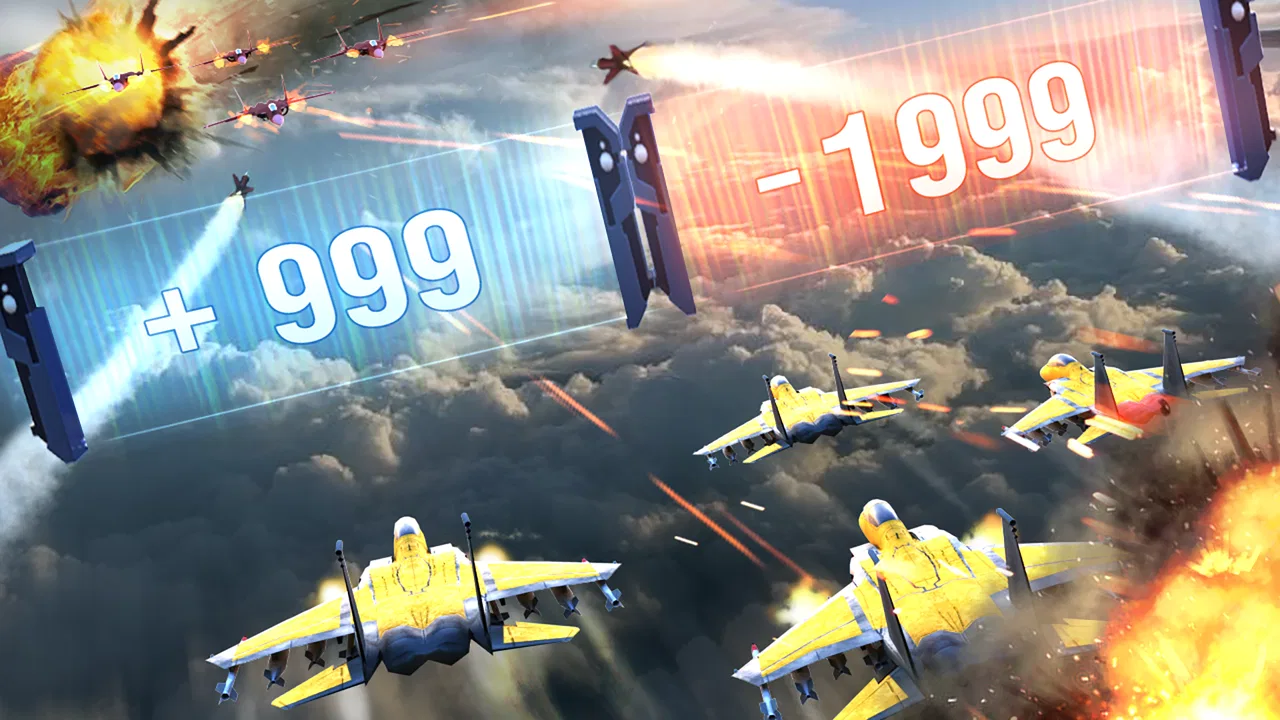
Invasion: Aerial Warfare is a strategy game focused on military operations, base development, and aerial combat. You build and upgrade your headquarters, train different units, research technologies, and participate in battles against enemy forces and other players. The game combines resource management with real-time or event-based combat, so planning your army and improving your defenses is just as important as attacking.
02Can I play Invasion: Aerial Warfare offline?
The game is primarily designed as an online experience, so a stable internet connection is generally required for the main features. Online access is needed to synchronize your progress, manage your base, join events, interact with alliances, and participate in multiplayer battles. Some menus or previously loaded content may open without a connection, but you should not expect the complete game to work offline.
03Is Invasion: Aerial Warfare free to download and play?
Invasion: Aerial Warfare can usually be downloaded and started for free, but it may include optional in-app purchases. These purchases can provide resources, speed up construction or research, unlock special offers, or support progression. You can enjoy the core gameplay without paying, although progress may take longer and competitive events can feel more demanding for players who choose not to spend money.
04Does the game include multiplayer or alliance features?
Yes, the multiplayer and alliance elements are an important part of the experience. Players can communicate with others, cooperate on objectives, contribute to alliance activities, and take part in competitive battles or limited-time events. Joining an active alliance is often helpful because experienced members can provide advice and support. However, multiplayer competition may require regular activity and careful resource management.
05What should I know about progression and device requirements before installing it?
Progression in Invasion: Aerial Warfare is built around upgrading your base, unlocking stronger units, researching improvements, and completing missions or events. The game can become more complex as you advance, with timers, resource shortages, and increasingly powerful opponents. Before installing, make sure your device has enough free storage, updated operating software, and a reliable connection, as performance may vary on older phones or tablets.
Pros
- Fast-paced aerial battles are easy to pick up and play.
- Multiple aircraft types offer different handling and combat styles.
- Short missions work well for quick gaming sessions.
- Upgrade options provide a clear sense of progression.
- Air combat effects make victories feel satisfying.
Cons
- Some missions may become repetitive after extended play.
- Higher-level upgrades can require considerable grinding.
- Touch controls may feel imprecise during intense dogfights.
- The difficulty can rise sharply in later stages.
- Device performance may vary during effects-heavy battles.

Invasion: Aerial Warfare
Gallery